

Waste is a central theme in Beyond Recycling, and we finish off by connecting waste to food. We talk often about the impacts of our waste, and our food system ties in especially well if we look at transportation and food that goes uneaten.
We define “Good Food” using 5 N’s:
-Nutritious: healthy
-Near: local
-Now: seasonal
-Naked: not packaged in disposable wrappers
-Natural: whole foods or not heavily processed
Our first field trip together this year was a tour of the local grocery store followed by a visit to the Food Recovery Depot.
At the grocery store, we visited each department and learned about their efforts to reduce packaging and food waste. One exciting stop here was the cardboard compactor that makes “Wall-E” style cubes so more material can fit on each truck that returns to the shipping warehouse. “Wall-E” helps to reduce the store’s transportation footprint by compacting cardboard before transporting it to the recycling depot.
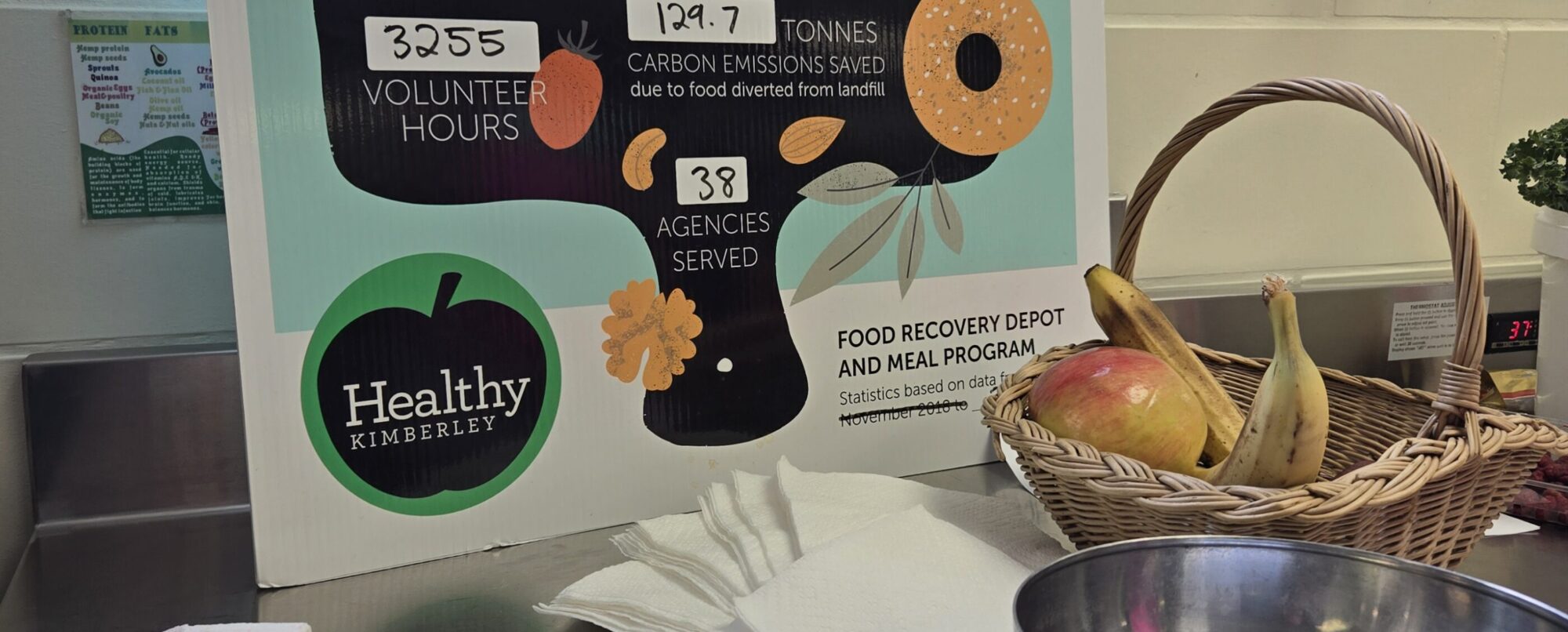
Most significantly of all, this grocery store is part of Kimberley’s food recovery program and donates all of the unsellable but still edible foods to the Healthy Kimberley Food Recovery Depot – and that’s where we went next.
At the Food Recovery Depot, we saw how food is sorted for the Food Bank, compost, farm animals, and human re-distribution – all of which is diverted from ending up in the landfill. The students got help with this sorting and with prepping food to send out to local organizations like the Early Learning Center, school lunch programs, and even the general public, which saves huge amounts of food from ending up in the landfill. We talked a lot about greenhouse gases, transportation emission, and the difference between best before and expiry dates.
The class was very engaged and helpful, earning their on diverted snack!
