

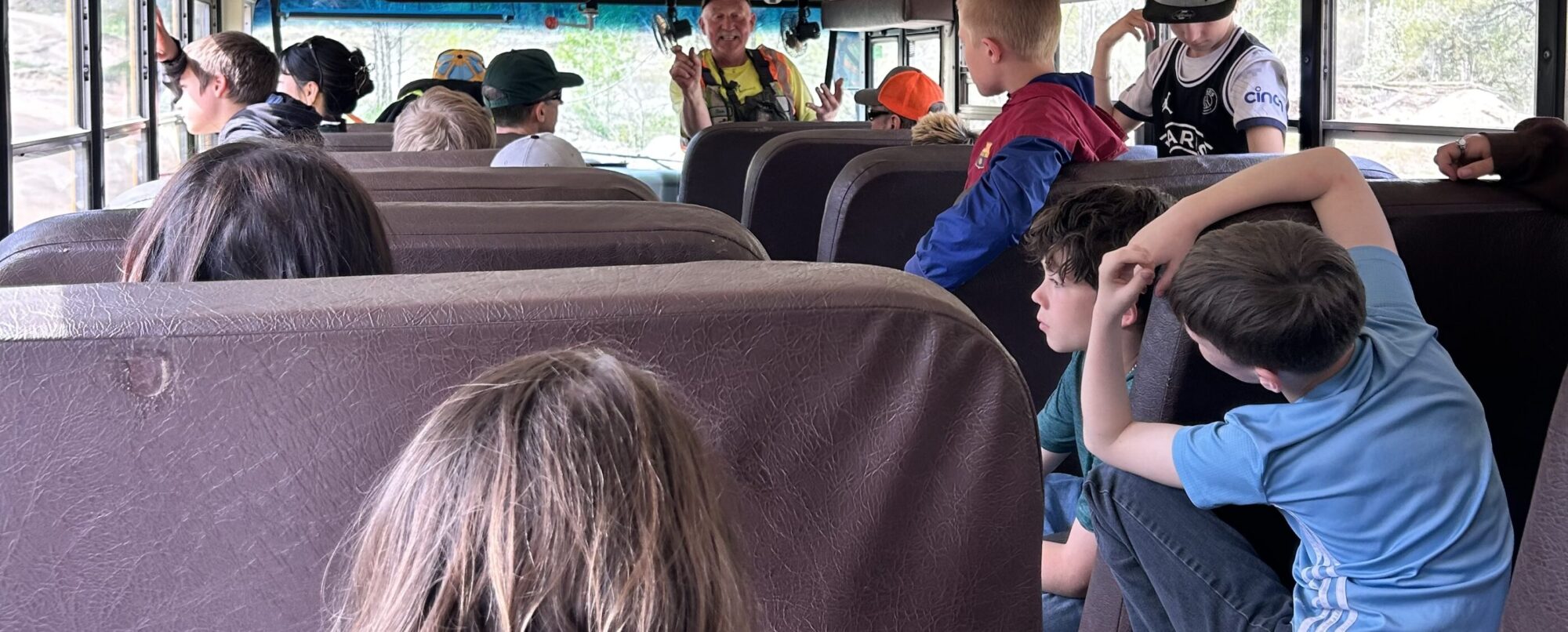
One of the highlights of the Grade 5/6 class’s visit to the Ootischenia Landfill was meeting Stan, the landfill’s main operator and a proud Winlaw Elementary alumnus. Stan was delighted to welcome students from his former school and give them a firsthand look at his workplace.
It was immediately clear how much Stan loves his job. Students were inspired by the passion and enthusiasm he brought to explaining landfill management and the important role it plays in protecting both the environment and the surrounding community. Stan shared how careful landfill operations help reduce contaminants from entering the environment and ensure that waste is managed safely and responsibly.
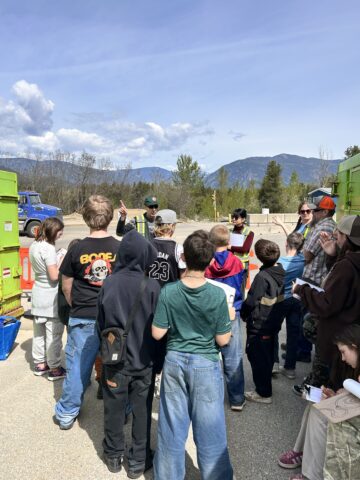 Students learned that they can support people like Stan by reducing the amount of waste that ends up in the landfill. Through learning about the Regional District of Central Kootenay’s waste diversion programs, they discovered how recycling, composting, and reusing materials can help extend the life of our landfill and reduce the need for costly future landfill development.
One thing every student noticed was that the landfill didn’t smell at all, a surprise considering it is the destination for our community’s garbage.
They learned that this is a direct result of careful management and planning.
The class had already been putting these lessons into practice. Although the school does not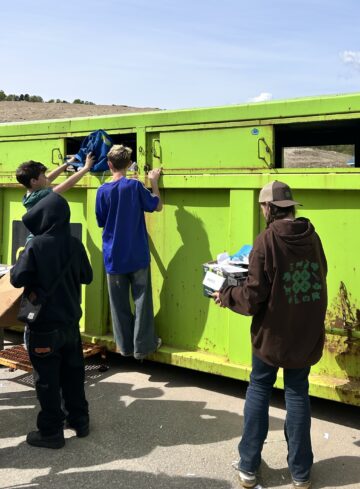 currently have a recycling program, students spent the previous several weeks collecting and sorting their classroom recyclables. During their visit, they brought the materials to the landfill’s recycling depot and correctly sorted them into the appropriate containers, diverting the equivalent of two full garbage bags from the landfill. They also learned that manufacturers help fund many recycling programs through stewardship fees paid on product packaging, helping support recycling efforts throughout our region.
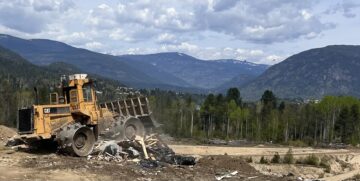
A definite highlight of the day was seeing the heavy machinery used to compact and manage waste. As one student excitedly exclaimed, “Wow, we are driving on top of our garbage!”
The class also toured Selkirk College’s sustainability and waste diversion programs, where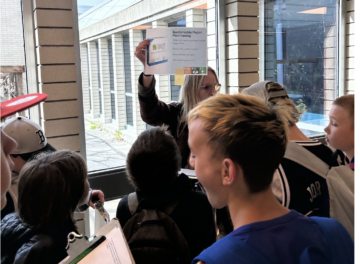 they learned about innovative ways to reduce waste. Students discovered that the college uses printer paper made from sugar cane waste and processes cafeteria food scraps using large food cyclers. The resulting nutrient-rich material is then donated to local farmers. This process helps reduce the amount of food waste entering the landfill and minimizes the creation of leachate, or, as the students learned to call it, “garbage juice.”
By the end of the day, students had gained a deeper understanding of where our waste goes and how each of us can play a role in creating a more sustainable future.