

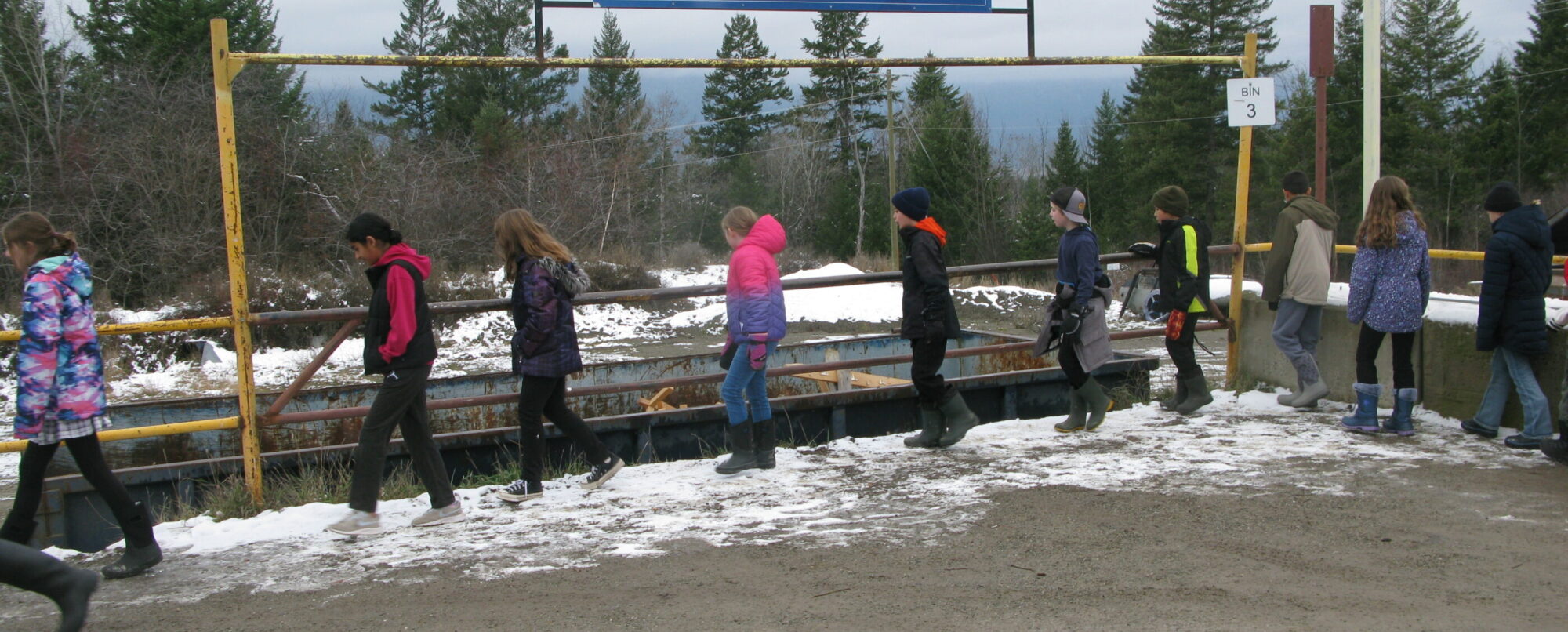
Today Mrs. Cooper’s gr 4/5 class spent a chilly morning exploring the Creston Landfill. The students saw the recycling area first. This is where people drop off cardboard, glass, aluminum and plastic containers. These materials are then transported in big bales and made into new products. Recycling keeps these valuable materials out of the landfill. Akane Norimatsu, RDCK Resource Recovery Technician, was able to clarify some tricky recycling questions. For example, where does a paper drinking cup go? Paper recycling? Plastic recycling? Compost? ANSWER: Paper cups goes to plastic recycling because it has a plastic liner. The plastic liner prevents the liquid from spilling out of the paper cups.
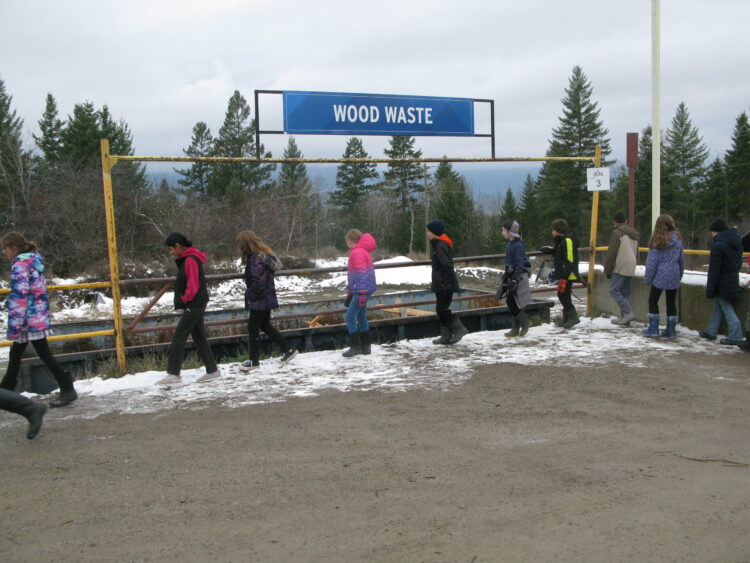
There is only so much room in the landfill, so we need to save that space for the ‘true’ garbage. Diversion programs keep materials like scrap metal, wood waste, yard waste, compost, propane tanks and tires, out of the landfill. While at the landfill we saw people dropping old metal pipe into the scrap metal bin. Old lumber was dropped into the wood waste bin. We later saw a truckload of wood chips (made of the wood waste bin) put on a landfill road. This reduces slippery, muddy conditions on the landfill roads.
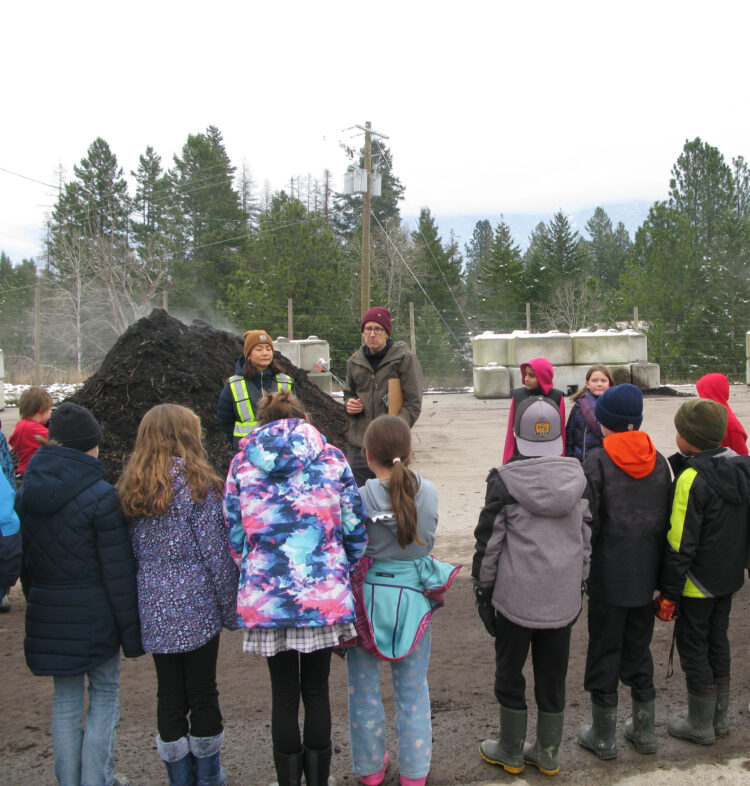
At the composting facility, Todd Johnston, RDCK Environmental Services Coordinator, showed us how compost and chipped yard waste are mixed together. These piles are aerated by a long perforated pipe, and turned. There were several different ages of compost piles. We could see the oldest piles looked like soil, and many were steaming. The students made connections with their own classroom compost pile. They mix leaves with the food scraps. Sienna asked ‘How hot do the compost piles here get?”. The RDCK compost piles need to reach 55C for 3 days to meet commercial compost regulations. The students were curious if their school compost will reach that temperature. They were eager to measure the temperature of their school compost pile soon.
At the active face of the landfill, students were amazed by all the plastic in the landfill. They also were impressed by the compacter working to compress the garbage. There were big metal plates that cover the garbage at night to keep out the animals and water out of the active cell. In addition, the landfill is surrounded by an electric fence to keep out the grizzly bears. Todd and Akane explained how it’s important to keep animals, wind and water from spreading garbage. Preventing these vectors from moving garbage protects animals, water and the environment.
Keeping water out of landfills is also an important challenge, explained Todd. Leachate is a special word for garbage ‘tea’. When water seeps through a landfill, it picks up pollution from all the garbage. If leachate gets into the water table this can be very bad news for fish and drinking water. Keeping compost/food waste out of the landfill is one way to reduce leachate. Food is a wet substance a contributes liquid to the landfill. Food also produces methane when decomposed anaerobically. Methane is a strong greenhouse gas, so there is a flare and landfill to burn it off.
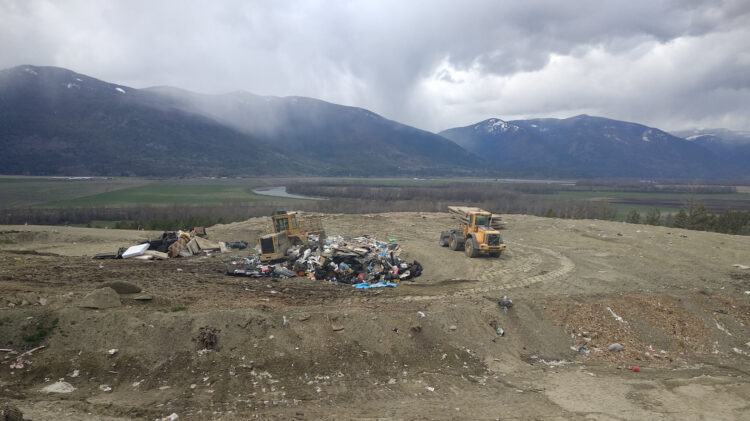
The students also noticed a big pile of mattresses at the landfill. Akane said mattresses aren’t recycled right now but they are working on a program. Mattresses don’t compact very well, so operators have put them at the bottom of a new landfill cell. Also, mattress have lots of materials like wood, steel, and foam that could be recycled.
Mrs Cooper said ‘the Creston landfill has won an award for best landfill view in the past’. ‘It looks like a painting’ said Owen. It’s true, with the fog that morning, the view to the west did look like a painting. The landfill has a view of the Selkirk mountains, and the Kootenay River flowing in the valley bottom. Another reminder to divert our waste by reducing, reusing, recycling and composting!